
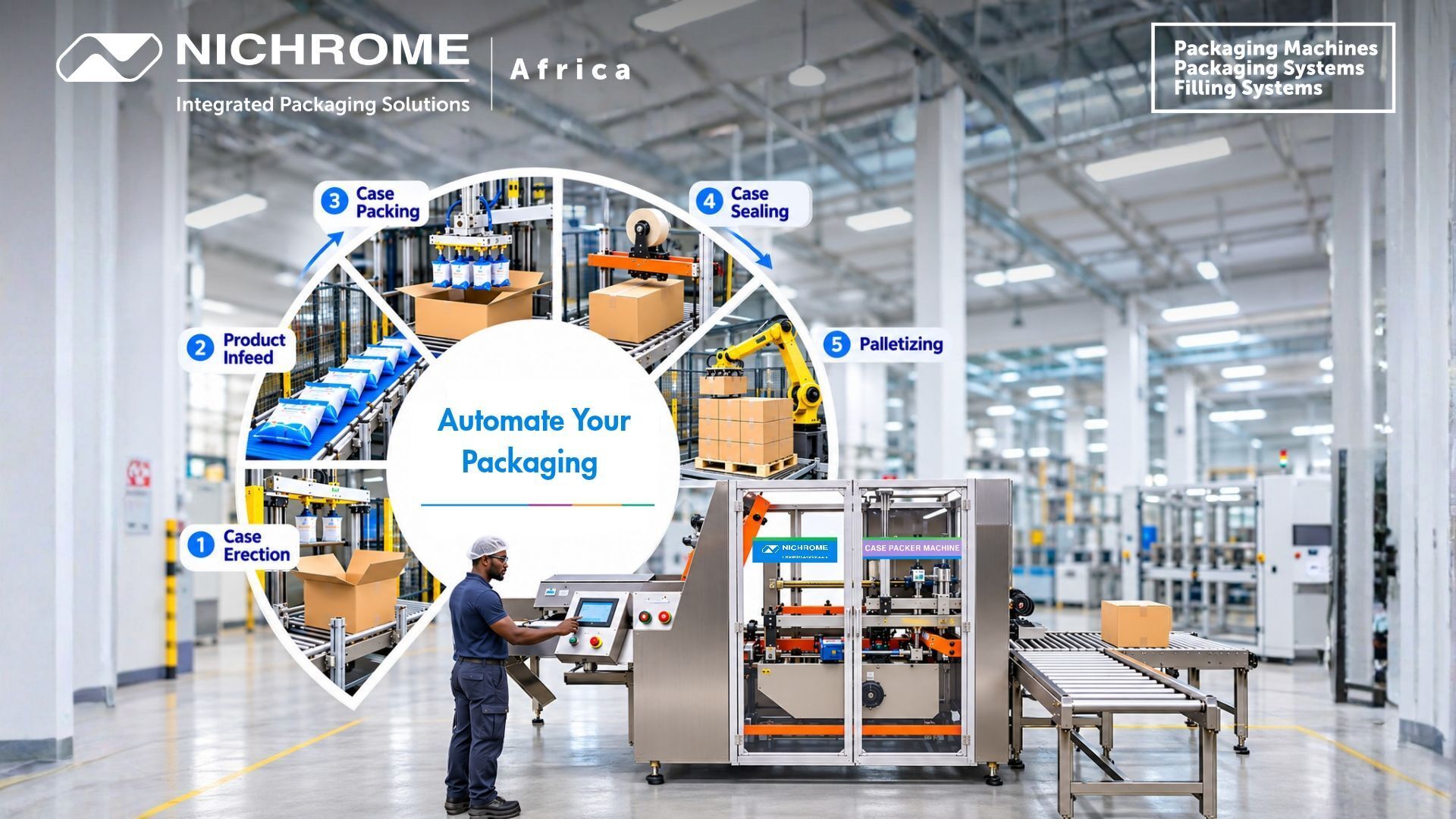
How Automated Case Packing Improves End-of-Line Packaging Efficiency
Manufacturing efficiency depends on more than how quickly products are filled, sealed and packed. Once primary packaging is complete, products must be organised into shipping cases, prepared for storage and made ready for distribution. These final operations are essential to maintaining a smooth production flow.
For manufacturers handling high volumes of packaged products, manual case packing can become a bottleneck. As production output increases, manually collecting pouches, arranging them into cartons and preparing cases for dispatch can demand considerable time and operator involvement.
This is where an automatic case packer machine can make a difference. By automating the process of loading finished packs into cases, manufacturers can create a more consistent and coordinated end-of-line packaging operation.
When combined with other end of line packaging machines, such as case erectors, case sealers, conveyors and palletizing equipment, automated case packing can form part of a wider packaging automation system designed around production and distribution requirements.
For manufacturers looking to improve throughput, reduce repetitive manual handling and plan for future capacity, automated case packing is an important consideration in end-of-line packaging.
Challenges of Manual Case Packing
Manual case packing may be suitable for certain production volumes and applications. However, as output increases, several operational challenges can emerge.
1. Repetitive Manual Handling
Operators may need to collect individual pouches, orient them correctly, arrange them in a specific pattern and place them into shipping cartons. Repeating these activities throughout a production shift can increase the physical demands on workers and make consistent output more difficult to maintain.
Automation can help reduce repetitive handling by transferring defined packing operations to a suitable machine.
2. Inconsistent Packing Patterns
Shipping cases often require products to be arranged in a predetermined configuration. Manual packing can introduce variation in pouch orientation, placement and case loading, particularly during extended production runs.
An appropriately configured automatic case packer machine can help maintain repeatable packing patterns according to the selected case format and product requirements.
3. End-of-Line Bottlenecks
A primary packaging machine may produce finished pouches faster than operators can pack them into cases. When case packing cannot keep pace with upstream production, products may accumulate between processes, disrupting the overall workflow.
Evaluating packing speed alongside upstream output and downstream handling capacity helps manufacturers plan a balanced packaging line.
4. Limited Production Flexibility
Manufacturers may need to accommodate different pouch sizes, case dimensions or packing configurations. Changing these formats manually can require additional setup and coordination.
The flexibility of an automated system depends on its design, tooling and available adjustments. These requirements should be assessed before selecting equipment.
Benefits of Automated Secondary Packaging
Automated secondary packaging moves products from individual retail packs into organised shipping cases and prepares them for subsequent handling. When the equipment is selected and configured appropriately, it can support several operational improvements.
1. Improved Packing Efficiency
An automatic case packer machine automates defined case-loading operations, reducing dependence on manual product placement. This can help manufacturers establish a more predictable packing process and coordinate the end of the line with upstream production.
Actual throughput depends on the pouch format, case configuration, machine specification and operating conditions.
2. Consistent Case Loading
Repeatable product placement can help maintain uniform case configurations. Consistency is particularly important when cases must be stacked, transported or handled through downstream logistics operations.
The packing arrangement should be designed around product characteristics, case strength and distribution requirements.
3. Reduced Repetitive Handling
Automating repetitive case-loading tasks can reduce the amount of manual intervention required at the end of the line. This allows production teams to review operator allocation and focus attention on activities that still require human oversight.
Automation should be evaluated alongside guarding, safe operating procedures and appropriate operator training.
4. Better Coordination Across Packaging Stages
End-of-line packaging rarely involves a single machine. A case erector machine can prepare empty cartons, an automatic case packer can load products, and a suitable sealing system can close cases before palletizing.
When these processes are planned together, manufacturers can work towards a more coordinated packaging workflow with fewer avoidable interruptions between stages.
5. Support for Production Growth
As manufacturing volumes increase, businesses may need to upgrade from manual operations to automated packaging lines. Automation planning allows manufacturers to assess current requirements alongside potential future capacity.
The right solution depends on production targets, available floor space, product formats, integration requirements and the overall investment case.
Nichrome’s Fully Automated 5 kg Pouch Case Packer
For manufacturers handling large-format pouches, the transfer of finished packs into shipping cases is an important stage of end-of-line packaging.
Nichrome’s fully automated 5 kg pouch case packer provides a relevant application to explore how case packing automation can support this process. Rather than treating case packing as a standalone manual activity, manufacturers can evaluate it as part of the complete packaging workflow.
The system should be assessed against the required pouch dimensions, number of pouches per case, case configuration, production speed and downstream handling requirements. These parameters determine how the equipment should be specified for a particular application.
Watch the Fully Automated 5 kg Pouch Case Packer
https://youtu.be/C0XId1dTOqE?si=8yksXGx8T4IAPBMr
Integrating Case Packing with End-of-Line Packaging Machines
Case packing can become even more effective when considered alongside the equipment that prepares, closes and handles shipping cases.
A typical end-of-line workflow may include:
- Case erection: An automatic case erector forms corrugated cartons and prepares them for loading.
- Case packing: The case packer arranges and loads the finished pouches into the specified case configuration.
- Case sealing: A suitable sealing system closes the cases for handling and transportation.
- Palletizing: Palletizing equipment or a robotic palletizer stacks completed cases onto pallets according to the required pattern.
- Wrapping: A suitable stretch wrapping or shrink wrapping system may be used where required by the product and distribution process.
Not every production line requires every stage. The appropriate configuration depends on the product, packaging format, case design, throughput and distribution requirements.
By evaluating these processes together, manufacturers can identify suitable opportunities for industrial packaging automation and plan a more coordinated end-of-line operation.
Why Choose Nichrome for Integrated Packaging Solutions?
Selecting packaging automation equipment requires an understanding of the product, production process and downstream logistics requirements. Manufacturers should consider more than the speed of an individual machine.
Nichrome provides packaging machinery and integrated packaging solutions across food, dairy, pharmaceutical and non-food applications. Its published Africa portfolio includes case packing, case erection, palletizing and related packaging systems.
For businesses evaluating end of line packaging machines, a broader system approach helps bring primary packaging, secondary packaging and downstream handling requirements into the same planning process.
When assessing a solution, manufacturers should consider:
- Product and pouch specifications.
- Required case dimensions and packing patterns.
- Target production throughput.
- Compatibility with upstream packaging equipment.
- Case sealing and palletizing requirements.
- Floor space, maintenance access and operator safety.
- Flexibility for future production needs.
- Technical support and service requirements.
These factors help establish whether a standalone automatic case packer or a wider integrated packaging system is the more appropriate choice.
Explore Nichrome Africa’s packaging capabilities: https://africa.nichrome.com/
Conclusion: Improve End-of-Line Efficiency with Automated Case Packing
Efficient end-of-line packaging helps manufacturers move finished products from primary packaging towards storage and distribution in a more coordinated way. When manual case packing becomes a constraint, automation can help standardise packing operations, reduce repetitive handling and improve coordination with upstream and downstream equipment.
An automatic case packer machine is one component of this process. When combined with a suitable case erector, sealing system and palletizing equipment, it can form part of a wider packaging automation system tailored to specific production requirements.
For manufacturers evaluating automated packaging lines in Africa, the next step is to assess current bottlenecks, case formats, production targets and integration requirements before selecting the appropriate solution.
Explore Nichrome’s packaging solutions for Africa:
https://africa.nichrome.com/
Discuss your packaging requirements with the Nichrome team to identify an approach aligned with your production and end-of-line handling needs.
Frequently Asked Questions (FAQs)
An automatic case packer machine automatically arranges and loads products into shipping cases or cartons according to a specified packing configuration. Depending on the application, it can handle pouches, bottles, jars and other packaged products.
Automated case packing reduces dependence on manual product placement, supports repeatable case configurations and helps coordinate finished-product handling. Its impact on throughput depends on the machine specification, product format and integration with the rest of the packaging line.
A case erector forms flat corrugated blanks into open cartons ready for loading. A case packer places products into those cartons. The two machines can be integrated to create a coordinated secondary packaging process.
An end-of-line packaging system may include conveyors, case erectors, case packers, case sealers, palletizing equipment and stretch wrapping systems. The exact configuration depends on the products, production requirements and distribution process.
A suitable case packer can be configured for 5 kg pouches when the machine design supports the pouch dimensions, weight, handling characteristics and required case configuration. Manufacturers should confirm these specifications with the equipment supplier before selecting a system.
Integrated packaging solutions coordinate relevant equipment across multiple packaging stages. They can help improve workflow, reduce avoidable interruptions and support more consistent product movement between processes.
Manufacturers should assess product format, case dimensions, required throughput, available floor space, upstream and downstream compatibility, maintenance access, operator safety and future production requirements.
Nichrome’s Africa website presents packaging machinery and integrated solutions for food, dairy, pharmaceutical and non-food applications, including case packing, case erection and palletizing technologies. Specific equipment suitability should be confirmed against the intended application.
Palletizing equipment arranges completed cases or other packaged loads onto pallets for storage and transportation. Depending on the application, manufacturers may use robotic, gantry or other suitable palletizing systems.
Visit https://africa.nichrome.com/ to explore Nichrome’s packaging portfolio and contact the team to discuss case packing, end-of-line automation and integrated packaging requirements.