
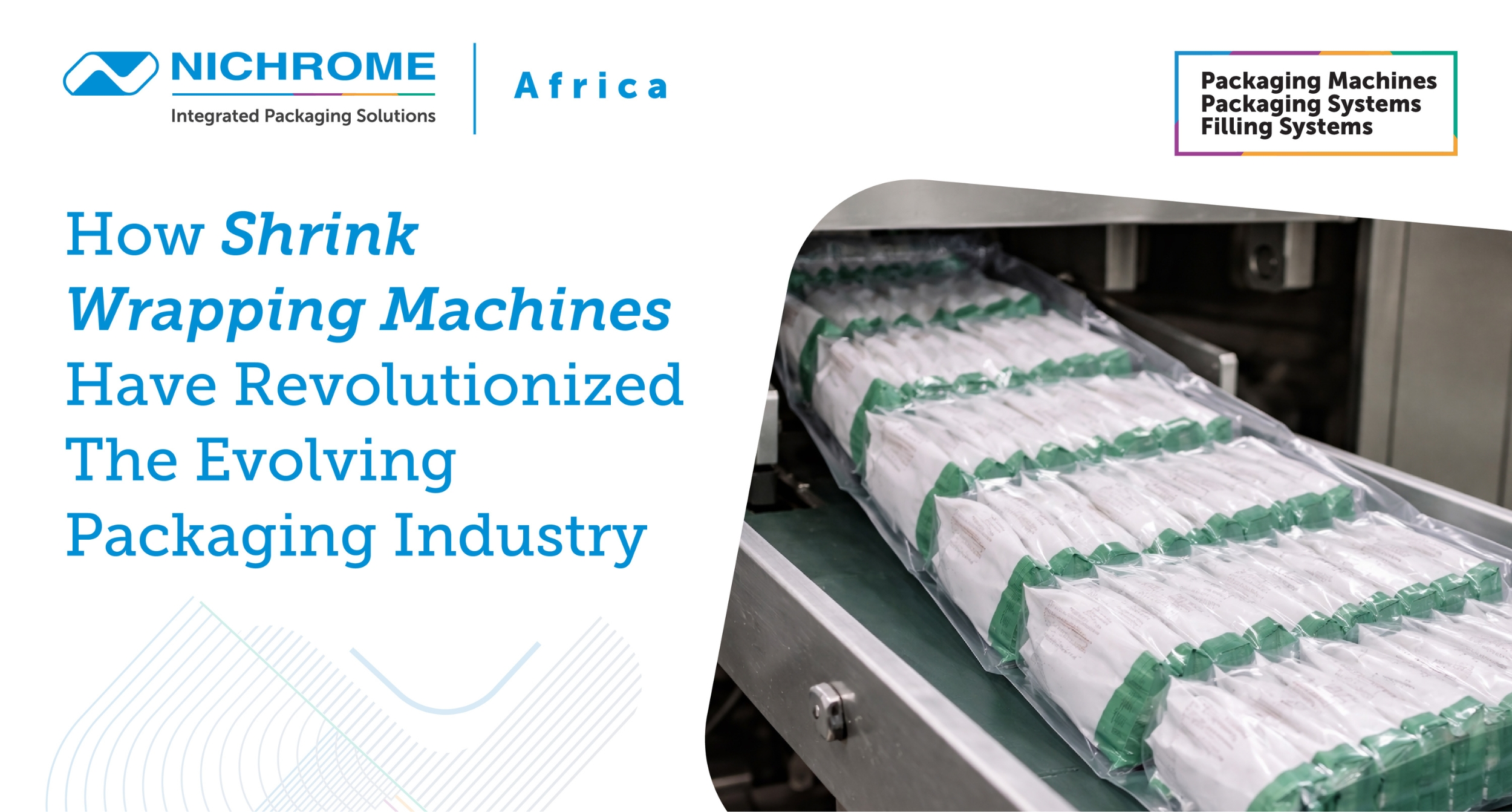
How Shrink Wrapping Machines have Revolutionized the Evolving Packaging Industry
Manufacturing industries across the globe are undergoing a profound transformation. Accelerated by the growth of e-commerce, rising consumer expectations around safety and presentation, and the rapid adoption of Industry 4.0, production environments are becoming faster, smarter, and more demanding than ever before. In this evolving landscape, operational excellence is no longer confined to product design or production speed alone—it increasingly depends on the intelligence and efficiency of packaging operations.
At the center of this shift is the rise of advanced shrink wrapping machines. What was once considered a simple end-of-line function has evolved into a strategic capability that directly influences productivity, supply chain resilience, sustainability, and brand perception. Today, shrink wrapping forms a critical component of automated packaging machinery, seamlessly connecting manufacturing output with global distribution requirements.
From Manual Constraints to Automated Precision
Packaging has historically been one of the most labor-intensive and inconsistent stages of manufacturing. In earlier industrial setups, products were manually wrapped, taped, or boxed—processes that limited throughput and introduced variability in quality. As production volumes increased during the 20th century, these manual methods became a serious bottleneck, unable to match the speed of modern manufacturing lines.
The introduction of shrink wrapping technology marked a decisive turning point. By applying controlled heat to shrink a polymer film tightly around a product, manufacturers gained a faster, more uniform, and structurally secure packaging method. This innovation was not merely cosmetic; it significantly improved load stability, product protection, and visual consistency.
Over time, shrink wrapping machines progressed from semi-automatic standalone units to fully integrated packaging machines. Today’s systems are capable of operating at exceptionally high speeds, maintaining precision across thousands of units per hour while meeting stringent quality standards. This evolution laid the foundation for scalable manufacturing in an increasingly competitive global marketplace.
How Modern Shrink Wrapping Technology Works
At a technical level, shrink wrapping involves enclosing a product in a plastic film—commonly Polyolefin (POF), Polyethylene (PE), or PVC—followed by controlled exposure to heat. As the film shrinks, it conforms tightly to the shape of the product, creating a secure, protective seal.
However, modern shrink wrapping is far more sophisticated than its basic principle suggests. Today’s packaging machines incorporate precision sealing systems, advanced heat tunnels, servo-driven controls, and intelligent sensors to ensure uniformity, efficiency, and minimal material waste.
Three Critical Packaging Functions
Within modern automated packaging machinery, shrink wrapping plays three essential roles:
- Primary packaging, where individual products are sealed for protection and presentation
- Secondary packaging, where multiple units are bundled together for retail or handling efficiency
- Tertiary packaging, where products are stabilized for storage and long-distance transportation
This versatility allows shrink wrapping machines to serve diverse industries and applications, often outperforming traditional carton-based solutions in both speed and cost efficiency.
The Rise of Integrated Packaging Systems
One of the most significant shifts in the packaging industry is the move toward fully integrated packaging machines. Rather than operating as isolated units, shrink wrapping machines now function as synchronized components within intelligent production lines.
In a modern manufacturing environment, shrink wrappers are seamlessly connected to upstream and downstream equipment such as bottle filling machines, labeling systems, cartoners, and palletizers. These integrated systems communicate through centralized control platforms, allowing manufacturers to monitor performance, adjust speeds, and maintain consistency across the entire line.
Operational Benefits of Integration
- Optimized throughput, as machines automatically synchronize speeds to prevent bottlenecks
- Reduced downtime, with real-time feedback enabling rapid corrective action
- Improved space utilization, as integrated lines require a smaller footprint
- Data-driven decision-making, supported by accurate tracking of film usage, energy consumption, and output
This system-level integration has transformed shrink wrapping from a functional necessity into a strategic asset that directly contributes to overall equipment effectiveness (OEE).
Transforming Food and Beverage Packaging
The food and beverage industry exemplifies the value of advanced shrink wrapping technology. With strict hygiene standards, high-volume production, and intense cost pressures, reliable packaging is critical.
Enhancing Food Safety and Shelf Life
Modern food packaging machinery relies on shrink wrapping to create protective barriers against moisture, dust, and contamination. In fresh produce, meat, and ready-to-eat products, shrink-wrapped packaging helps preserve freshness while providing visible tamper evidence—an essential factor in consumer trust.
Efficient Secondary Packaging
Shrink wrapping has become the preferred method for bundling bottles, cans, and cartons. When integrated with bottle filling machines and labeling systems, shrink wrappers enable fast, secure multipack formation without the need for additional cartons or adhesives. This approach reduces material costs while maintaining structural stability.
Supporting High-Speed Operations
High-capacity shrink wrapping machines are designed to keep pace with modern filling and processing lines, ensuring that packaging never becomes a limiting factor in production output.
Synergy with VFFS Machines and Flexible Packaging
Shrink wrapping does not replace primary packaging technologies—it enhances them. In many applications, VFFS machines (Vertical Form Fill Seal) are used to create individual pouches for powders, granules, snacks, or liquids. While these primary packs protect the product, they require secondary packaging for efficient handling and transport.
Shrink wrapping machines take the output from VFFS machines, collate individual packs into manageable bundles, and securely wrap them for storage or distribution. This seamless integration ensures product protection throughout the supply chain while improving logistics efficiency.
Strengthening Global Supply Chains
In today’s interconnected world, products often travel thousands of kilometers before reaching consumers. Packaging failures during transit can lead to damaged goods, financial losses, and reputational harm.
Shrink wrapping machines address these challenges by providing tight, uniform packaging that minimizes product movement and enhances load stability. When combined with stretch wrapping at the pallet level, shrink-wrapped goods are far more resistant to shifting, crushing, and environmental exposure.
For manufacturers operating in international markets, shrink wrapping has become an essential tool for ensuring consistency, reliability, and reduced freight damage.
Sustainability and Responsible Packaging Innovation
Sustainability has become a defining priority across manufacturing sectors, and packaging is under particular scrutiny. Modern automated packaging machinery has responded with innovations that significantly reduce environmental impact.
Material Optimization
Advanced shrink wrapping machines can process thinner, high-strength films that use substantially less plastic without compromising performance. This reduction in material consumption directly lowers waste and cost.
Energy Efficiency
New-generation heat tunnels incorporate improved insulation, airflow optimization, and energy recovery systems, reducing overall power consumption.
Recyclable Packaging Solutions
The industry is increasingly shifting toward mono-material, recyclable films that simplify waste processing and align with circular economy goals.
In many cases, replacing bulky corrugated packaging with optimized shrink film also improves transportation efficiency, allowing more products per shipment and reducing carbon emissions.
Industry 4.0 and the Future of Shrink Wrapping
As Industry 4.0 principles gain momentum, shrink wrapping machines are becoming smarter and more connected. Sensors, data analytics, and artificial intelligence are redefining how packaging lines operate.
Predictive Maintenance
Integrated systems continuously monitor machine health, identifying wear patterns and performance anomalies before failures occur. This predictive approach minimizes unplanned downtime and extends equipment lifespan.
Advanced Automation and Robotics
Robotic pick-and-place systems integrated with shrink wrapping machines enable rapid format changes and flexible production runs. Manufacturers can switch between pack sizes or configurations in minutes, supporting customization and shorter product lifecycles.
A Strategic Investment for Long-Term Competitiveness
Investing in shrink wrapping technology is no longer simply an operational decision—it is a strategic one. Modern packaging machines deliver measurable returns through labor optimization, improved product presentation, and scalable production capacity.
By automating repetitive and physically demanding tasks, manufacturers can redeploy their workforce into higher-value roles such as quality assurance, process optimization, and technical maintenance. At the same time, consistent, professional packaging strengthens brand perception and consumer confidence.
Shrink Wrapping : Cornerstone of Modern Manufacturing
The evolution of shrink wrapping machines mirrors the broader transformation of the manufacturing sector itself—from manual processes to intelligent, integrated systems designed for scale, resilience, and sustainability. Today, shrink wrapping stands at the intersection of efficiency, protection, and innovation.
As technology continues to advance, shrink wrapping will remain a foundational element of integrated packaging machines, supporting global supply chains and enabling manufacturers to compete in an increasingly demanding marketplace. For organizations seeking long-term growth and operational excellence, embracing advanced shrink wrapping solutions is no longer optional—it is essential to future success.